Friday, July 1, 2022

Death

 Although we all, being human, know the ultimate truth of our life and that is DEATH obviously, we do not accept or do not want it to be accepted as it should be ?!!! The end is pre decided when we begin but when it comes to life, we cannot think of it clearly somehow. 


There are reasons of death in the world i.e. Natural death, disease, Epidemic viruses, Accidents, etc.  At the same time, we already have lots of names for the same -DEATH- viz. Execution (the carrying out of a sentence of death on a condemned person.), assassination (the murder of a prominent or important person), murder (kill someone unlawfully and with premeditation.), Suicide (suicide is the act of intentionally causing one's own death) and so on and so forth.  


The Concept of death is discussed and accepted in different ways in different religions. Along with that Beliefs related to it are also multiple. These concepts include Emancipation, ghost, heaven or hell, life after death, death as the end of life or beginning of a new life? Mortality and immortality etc. 


After all there are two kinds of people: one who accepts death as a reality, the other who escapes or has fear of death.  

What type of human being are you? 

Comment your answer below. 


Discussion …..to be continued….on The Concept of Death in Literature 


Wednesday, January 26, 2022

ICT Tools for English Language Learning


·         Applications for English Language Learning 

 English is considered as the toughest thing to learn but if we look at the world, some intelligent people have come out with brilliant as well as interesting ideas to learn the English language. One of these ideas is Applications in our smart phones which can help us to learn or improve our language skills. 

BBC Learning App 

Duolingo 

Google Podcasts 

English Language Skills

English Grammar

English language listening

·         Websites/Blogs for English Language Learning

ESL POD.com 

ESL POD.com  BBC Learning

·         Dictionaries

There are many dictionaries available as applications either Online or Offline too. Here is a list of some of them:  

English Gujarati 

Oxford English Dictionary

  • Offline English Dictionary

Wordweb 

·         MOOCs for English Language Learning

These are the online platforms where learners can learn different subjects, acquire knowledge, and enhance skills Anytime Anywhere they wish to learn.

Swayam 

Edx  

Coursera 

Udemy  

 for more information on MOOCs, CLICK HERE 


Saturday, May 8, 2021

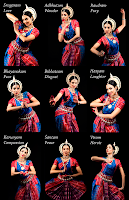
Rasa Sutra


“Vibhavanubhava-vyabhicari samyogad-rasa-nispattih”

(The Rasa is accomplished as a result of the conjunction of Vibhāva, Anubhāva, and Vyābhicāribhāva, which appeals to the Sthāyibhāva which leads to the Rasa experience.)(Sethuraman-191) 


  • Vibhāva: 

Vibhāva is the objective condition producing an emotion. They are stimuli, causes, or determinants of emotions. They are called vibhāva because they make emotions known to us in special way.The theoreticians who came after Bharata have divided Vibhāva into two types: 

Ālambana Vibhāva –

means a person or persons with reference to whom the emotion is manifested. 

For example, the father will feel tensed if his son is living careless life having no concern with future. Here the son is ālambanavibhāva because the tension and as a result anger arise in the father because of his son. 

Uddipana Vibhāva –

means the circumstances that have excited the emotion. 

In the situation, we have seen above, if there is any tension in father’s office then he would easily get angry to his son. Here the circumstances in his father’s office will be Uddipana Vibhāva. 


  • Anubhāva: (Consequences)

Anubhāva means bodily expressions by which the emotions are expressed. Anubhāva are those effects, which are found on the characters consequent upon their emotional agitations. They are called anubhāva becausewhat is represented is made to be felt, experienced by us (reader or spectacle)

In the situation discussed above, father will get angry and he might slap his son or break something in anger. That slapping or breaking of something is Anubhāva. 


  • Vyābhicāribhāva: 

Apart from dominant emotions, there are innumerable transient moods and mental states, which accompany them in any experience. They are known as vyabhicāri Bhava. Vyābhicāri means a series of diverse emotions that feed the dominant emotion. They do not have their independent status but permanent emotions cannot be projected in any poetry without them. 


Discouragement, Weakness, Apprehension, Envy, Intoxication, Weariness, indolence, Depression, Anxiety, Distraction, Recollection, Contentment, Shame, Inconstancy, Joy, Agitation, Stupor, Arrogance, Despair, Impatience, Sleep, Epilepsy, Dreaming, Awakening, Indignation, Dissimulation, Cruelty, Assurance, Sickness, Insanity, Death, Fright, Deliberation. 


In the situation discussed above, looking at the anger of his father, son may feel different emotions like anxiety or fright, which lead him to the dominant emotion that is fear. 


  • Sthāyibhāva: 

Sthāyibhāva is the basis for rasa experience. If anyone of it is missing in a person then he or she will not be able to experience the rasa corresponding to that particular Sthāyibhāva. That is why Bharata labels Sthāyibhāva as the king of all the other bhāva. Sthāyibhāva are the inborn gifts of men. They area called sthāyi because they always remain embedded in human organism. They exist in the form of an impression and are called into play simply by exciting causes and circumstances. Bharata anticipated that these eight permanent emotions are already there in each and every human being. 


Example of rasa realization: 

In the play Hayavadana by Girish Karnad, when Padmini narrates the scene of Kapila climbing the tree to fetch flowers for her,

“…what an ethereal shape! Such a broad back-like an ocean with muscles rippling across it-and then that small, feminine waist…”

Here, the attractive outlook of Kapila is the Vibhāva (Alambanavibhāva as Kapila is a human being), the garden and that tree on which Kapila climbs is also vibhāva (Uddipana as tree is non-human thing), Anubhāva is the opened eyes of Padmini constantly looking at Kapila’s body, which appeals to the dominant state of love which results into the realization of Sringāra rasa or the erotic sentiment.


Thursday, April 29, 2021

Process of Rasa Realization


  • The level of senses 

At first, the poet observes the world through his five senses i.e. eye, ear, nose, tongue, and skin. He sees something through his eyesight, listen something, touches something, smells something, or testes something. He perceives the world as per his ideology, his likings, or disliking. For example, a poet like William Wordsworth watches the rainbow and creates the poem i.e. “My heart leaps up when I behold a rainbow in the sky.” 


  • The level of imagination 

When a poet feels or observes the world through his five senses, it leads him to imagine something extraordinary. Being common human being we also watch rainbow in the sky but it is his imagination which leads Wordsworth to compose such a literary work on it. It reminds us Coleridge’s concept of secondary imagination. 


  • The emotional level 

Poet does not just observe the world, add the imagination, and create the poetry. He adds his emotions as well. His emotions for particular sight, event, objects, he adds into his work of art. 


  • Rasa experience 

When a reader reads that poem, the vibhāva, anubhāva, and vyābhicāribhāva in the poem appeals to the dominant states or sthāyibhā within him that leads him to experience the rasa.


  • Sādhāranikaran

Parallel to the poet, the reader also feels emotional as he connects his emotions with that of the emotions of a poet. Whatever he reads in the poem, it might have happened in his life or can happen in his life also. In a way, the poet narrates his own experiences but it is universal as at some or another way, the readers might have experienced or can experience in future the same which poet has experienced earlier. 


Example: 

The Flee by John Donne “It sucks me first and now sucks theeIn this flee our two bloods mingled be” (Donne)Five stages of rasa realization in it: 

  1. Senses- biting of a flee (skin- touch) 
  2. Imagination- mingling of blood of poet and beloved as the sexual experience or union 
  3. Emotions- poet’s emotion for his beloved (love)
  4. Rasa- sringāra rasa nispatti or erotic sentiment 
  5. Sadharanikaran- what Donne has felt through this experience is not new, biting of a flea is a common phenomenon.


Short Introduction to Rasa Theory


Nātyashāstra by Bharata is the most detailed, and elaborate of all treatises on dramatic criticism and acting ever written in any language and is regarded as the oldest surviving text on stagecraft in the world. Bharata in his Nātyashāstra demonstrates every facet of Indian drama while covering areas like music, stage-design, make up, dance, and virtually every aspect of stagecraft. 

Though, the exact date and authorship of Nātyashāstra is difficult to be stated, based on the different scholars’ arguments, it is widely accepted that, it has been written during the period between 200 B. C. E. and 200 C. E. and it is attributed to Bharata. Kapila Vatsayan, a leading scholar of Indian classical dance, has argued that based on the unity of the text, and the many instances of coherent references to later chapters in the earlier text, composition is likely that of a single person and that is most probably Bharata. 

Natyashastra is a text written in Sanskrit, consists of 6000 verses, 35 or 36 chapters. Some passages are written in prose form also. The text is in a form of a loose dialogue between Bharata and a number of munis who approach him, asking about Nātyaveda. The answer to this question comprises the rest of the book. Nātyashāstra is considered as fifth Veda.

In Nātyashāstra, Bharat has discussed about Rasa in Chapter 6, 7, 15, and 16. Let us discuss the theory of Rasa given by Bharata in detail. 


Concept of Rasa:

It is an Indian concept of aesthetic flavor, an essential component of any work of visual, auditory, or literary art that can only be suggested or experienced not described. It is a kind of contemplative abstraction in which the inwardness of human feeling suffuses the surrounding world of embodied forms.

Thus, it can be said that rasa is the aesthetic feeling that is created in the reader or spectator when he witnesses an effective presentation of the art. 


“Nahirasadhatekaschidarthapravartate”(Nothing operates other than rasa.) (Nātyasāstra)According to Bharata, rasa is the soul of poetry. It is meaningless if there is no rasa in any literary work. 

1. Sringāra rasa 

The Erotic statement or Sringāra rasa has its origin in the dominant state of love. It has two bases: (1) Union (sambhoga) and (2)Separation (vipralambha).When someone dressed up well and has attractive appearance, or the season of spring, or going to garden with beloved – such vibhāva results in experience (anubhāva) of the character to feel better, to get indulge in such movements, slight smile on face, blushing and that directly appeals to the dominant state of love which results in the realization of sringāra rasa.(Sethuraman-23-24)


2. Hāsya Rasa 

The Comic Sentiment or Hāsya rasa has its root in the dominant state of laughter. It can be created from comic statements, use of pun, different looks, etc. It can be shown on the stage with the consequents like widening of eyes, colour of the face, etc. This statement is of two types: (1) Self-centered- when a person himself laughs. (2) Centered in others- when he makes others laugh it.There are six varities of it: 

  1. Slight smile (smita) 

  2. Smile (hasit) 

  3. Gentle laughter (vihasit) 

  4. Laughter of ridicule (uphasit) 

  5. Vulgar laughter (apahasit) 

  6. Excessive laughter (atihasit) 

First two types (smita and hasit) belong to superior type of persons; next two types (vihasit and uphasit) belong to middling type of persons; and last two types (apahasit and atihasit) belong to inferior types of persons. (Sethuraman-25-26)

3. Karuna Rasa 

Pathetic sentiment or Karuna rasa arises from the dominant state of sorrow. It grows because of death of dear one, loss of wealth, failure, etc. It can be represented on stage by the consequences like crying, lamentation, change of colour, or loss of memory. (Sethuraman-27)


4. Rudra Rasa 

Rudra rasa or the furious sentiment has its origin in the dominant state of anger. This is created by determinants such as rape, abuse, or insult. Its actions are breaking something, fighting, slapping, drawing of blood, or such other deeds. Furious sentiment in its words, movements, and deeds is fearful and terrible. (Sethuraman-27-28) 


5. Vira Rasa 

The heroic sentiment or the Vira rasa has its origin in the dominant state of energy and it relates to the superior type of persons. It can be created by determinants like discipline, strength, dedication, presence of mind and such others. It is to be presented on the stage by the consequences like heroism, charity, firmness, etc. (Sethuraman-28-29)


6. Bhayankara Rasa 

The basis of terrible sentiment or Bhayankara rasa is the dominant state of fear. It arises in the darkness, battle, sight of ghosts, etc. It can be represented on the stage by the consequences like horripilation, trembling of hands and feet, change of colour, and such other consequences. (Sethuraman-29)


7. Bibhatsa Rasa 

The odious sentiment or Bibhatsa rasa originates from the dominant state of disgust. It is created by discussing or seeing harmful things, death by accident and bloodshed, etc. It is to be presented on the stage through consequences like vomiting, down of mouth, etc. (Sethuraman-30) 


8. Adbhuta Rasa 

The marvelous sentiment or Adbhuta rasa has its origin in the dominant state of astonishment. It can be created by determinants such as achievement of desired things or person, sight of heavenly things, pleasurable acts, etc. It can be represented on the stage by the consequences like tears of joy, widening of eyes, crying hāhāhā or Ohh My God! Etc. (Sethuraman-30) 

The Conch Shell in the Classroom: What Students Taught Me About India's Future

When I teach the Indian Constitution, I always face the same big problem: students try to memorize it like a dry textbook. It is easy to lea...